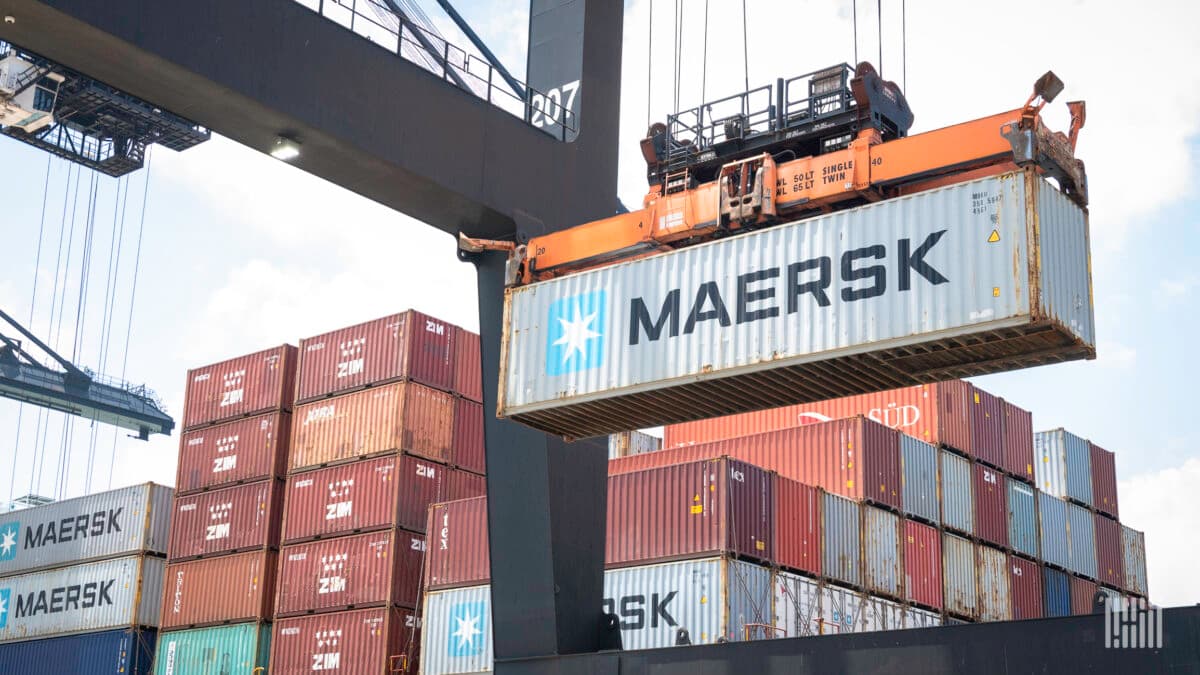
Photo via FreightWaves
The Federal Maritime Commission has levied a $1.9 million fine against Maersk, the world's largest container shipping line, for improper detention billing practices. According to FreightWaves, the penalty addresses violations involving charges assessed to third parties who were not party to original shipping contracts, a practice regulators determined violated federal maritime law.
Detention charges—fees assessed when cargo containers remain in a shipper's possession beyond an agreed-upon free period—are a standard cost in international logistics. However, the FMC enforcement action highlights the importance of transparent billing practices between carriers and the broader supply chain, including freight forwarders, customs brokers, and importers who facilitate cargo movement through Arizona ports and inland distribution centers.
For Phoenix-area businesses reliant on containerized imports and exports, particularly those in retail, manufacturing, and distribution sectors, the fine underscores the need for clear contractual terms with shipping carriers. Companies should review their service agreements with ocean carriers to ensure they understand who bears detention liability and under what circumstances charges apply.
The enforcement action reflects broader FMC efforts to regulate carrier conduct and protect shippers from unexpected fees. As supply chain transparency becomes increasingly important to Arizona businesses managing international trade operations, this case serves as a reminder to audit shipping agreements and maintain robust documentation practices to dispute unauthorized charges.